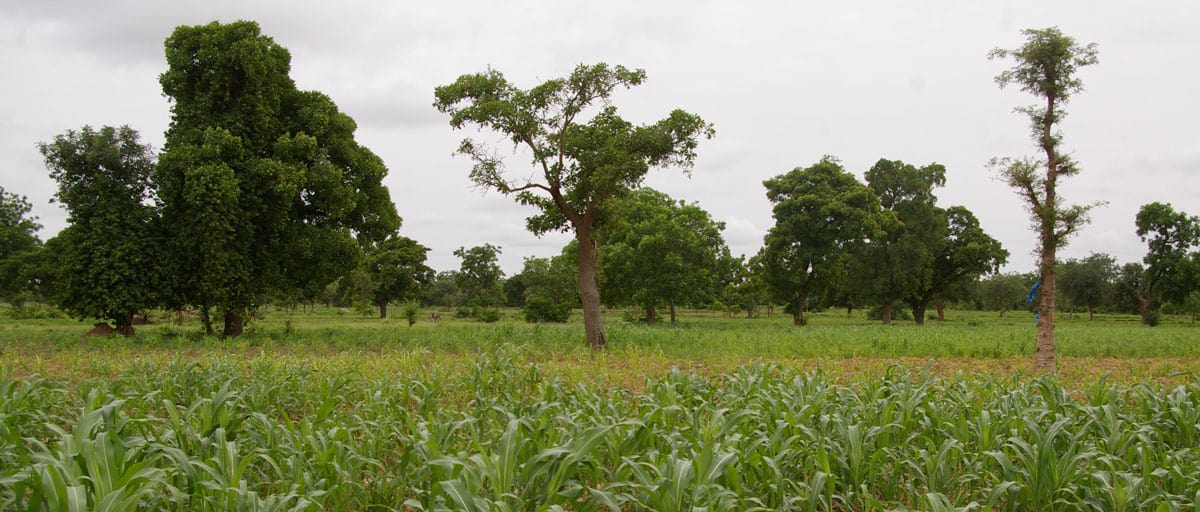
From drought to recovery: the re-greening in the Sahel
After decades of devastating drought, the Sahel is experiencing a remarkable recovery. Satellite data reveal a surprising trend: the region is re-greening, offering hope in the face of climate change.
This region of West Africa was hit by severe drought in the 1970s to 1990s due to global warming. Satellite images show a transformation of the landscape over the past 30 years. The increase in vegetation in the western Sahel can be attributed to two main factors.
- Climate shifts: increased precipitation. Studies suggest that rising global temperatures and changes in atmospheric aerosols level have shifted rainfall pattern in the Sahel;
- Human ingenuity: Sahelian farmers have led the way in adopting sustainable practices such as agroforestry, water conservation, and soil management.
Studies show that this re-greening is driven not only by natural processes, but also by intentional human efforts.
What does this re-greening mean for the landscape and the local populations? Dr. Elin Enfors-Kautsky, a former researcher at the Stockholm Resilience Centre, has explored this question in depth. In her study, she observed that « the species composition has changed from what it was prior to the drought. Despite recorded increased rainfall in the region after the drought, more drought-resistant, exotic tree species, such as the Neem tree are on the rise. An increase in shrub species has also occurred. »
Through interviews with farmers, Enfors-Kautsky’s team identified five possible social drivers, behind this transformation:
- Intensified land use due to population growth;
- Increased livestock rearing in villages;
- Preferential use of the fast growing, multi-purpose Neem tree;
- Tree-planting campaigns in the 1970-80s promoted the Neem tree and others drought-resistant, exotic tree species;
- Social memories of the drought crisis have made farmers more conservative – cautious and adaptative – in their planting strategy.
A model for climate adaptation
What does it mean in terms of success? The adaptation measures contribute, in the same time, to mitigate climate change and help adapt to it. Indeed, planting more trees and plants, absorb carbon dioxide, the largest contributor of greenhouse effect.
This is an example of successful adaptation as traditional knowledge and context are integrated into the responses and the design. Thus, resulting in reducing current vulnerabilities.
As the Sahel continues to re-green and global warming continues to reshape our world, the Sahelian communities story is a testament to the power of local knowledge and adaptive resilience. Human ingenuity and nature can work together to restore life.
Sources
- « Adapting to changing climate in drylands: The re-greening in Sahel as a potential success case » https://www.stockholmresilience.org/research/research-themes/stewardship-transformation/ecosystem-services-livelihoods-and-resilience-in-sahel
- « Cécile Dardel. Entre désertification et reverdissement du Sahel : Diagnostic des observations spatiales et in situ. Université Paul Sabatier – Toulouse III, 2014.» https://theses.hal.science/tel-00944267
- « A tree paradox in a greener Sahel » https://www.stockholmresilience.org/research/research-news
- UNCCD report: « Sécheresse, désertification et reverdissement au Sahel » https://www.unccd.int/sites/default/files/relevant-links
Auteur/autrice

kindja@gmail.com